Blown-in insulation in Bellingham WA - an attic and walls that hold your heat
Drafty rooms and a cold upstairs usually mean the attic or walls are running thin. We seal the gaps first, then blow in even coverage.
- Owner looks first I come out myself and show you what I'm seeing.
- Attic, walls or both We work out together where the insulation actually needs to go.
- Material picked for you We talk through cellulose and fiberglass before choosing one.
- Written step-by-step plan Each step is listed in order, with the reason it comes there.
- Licensed and fully insured.
- Free on-site estimates.
- Expect a reply within 1 business day.
How do you know your house needs blown-in insulation?
These are the signs we see in drafty and older houses, and catching them early usually means a simpler job before moisture or pests get into the attic.
Upstairs rooms run hot
If the bedrooms upstairs bake in summer and chill in winter, the attic insulation is usually thin, and every season you wait shows up on the power bill.
Cold floors and drafty walls
Walls that feel cold to the touch or rooms that never warm up often have empty cavities, and the furnace works harder until they're filled.
You can see the ceiling joists
If you look in the attic and the tops of the joists are showing, there isn't enough up there, and the gaps between them leak heat all winter.
Old insulation looks matted or stained
Flattened, stained or damp-looking insulation usually points to a roof leak or pests, and that problem keeps spreading under anything laid on top of it.
Thin at the edges of the attic
When the insulation piles up in the middle and drops to almost nothing near the outside walls, the coldest spots in the house stay cold.
The room over the garage
A room over the garage that never feels like the rest of the house usually has gaps in its floor or walls, and it gets harder to live in each season.
How we install blown-in insulation
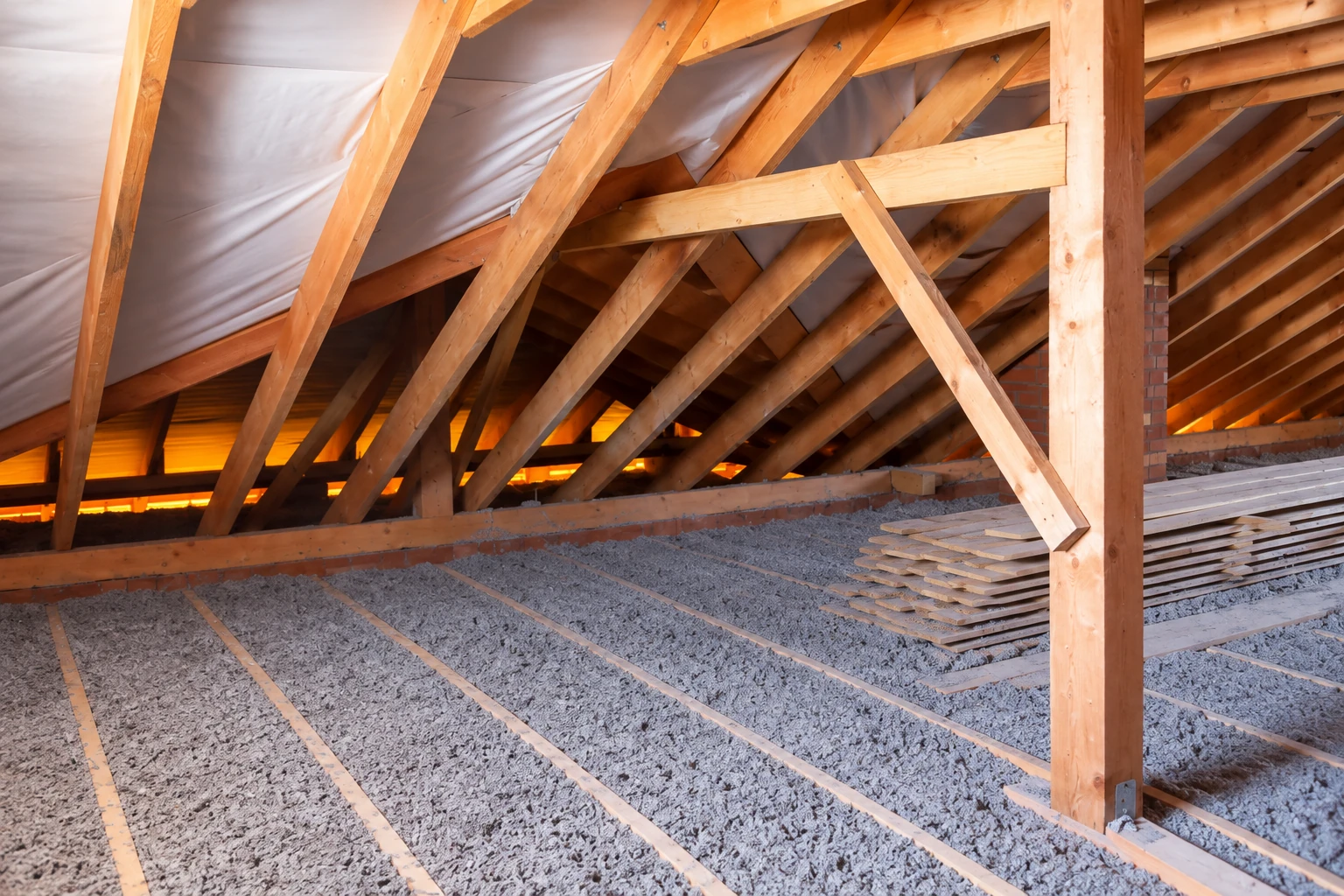
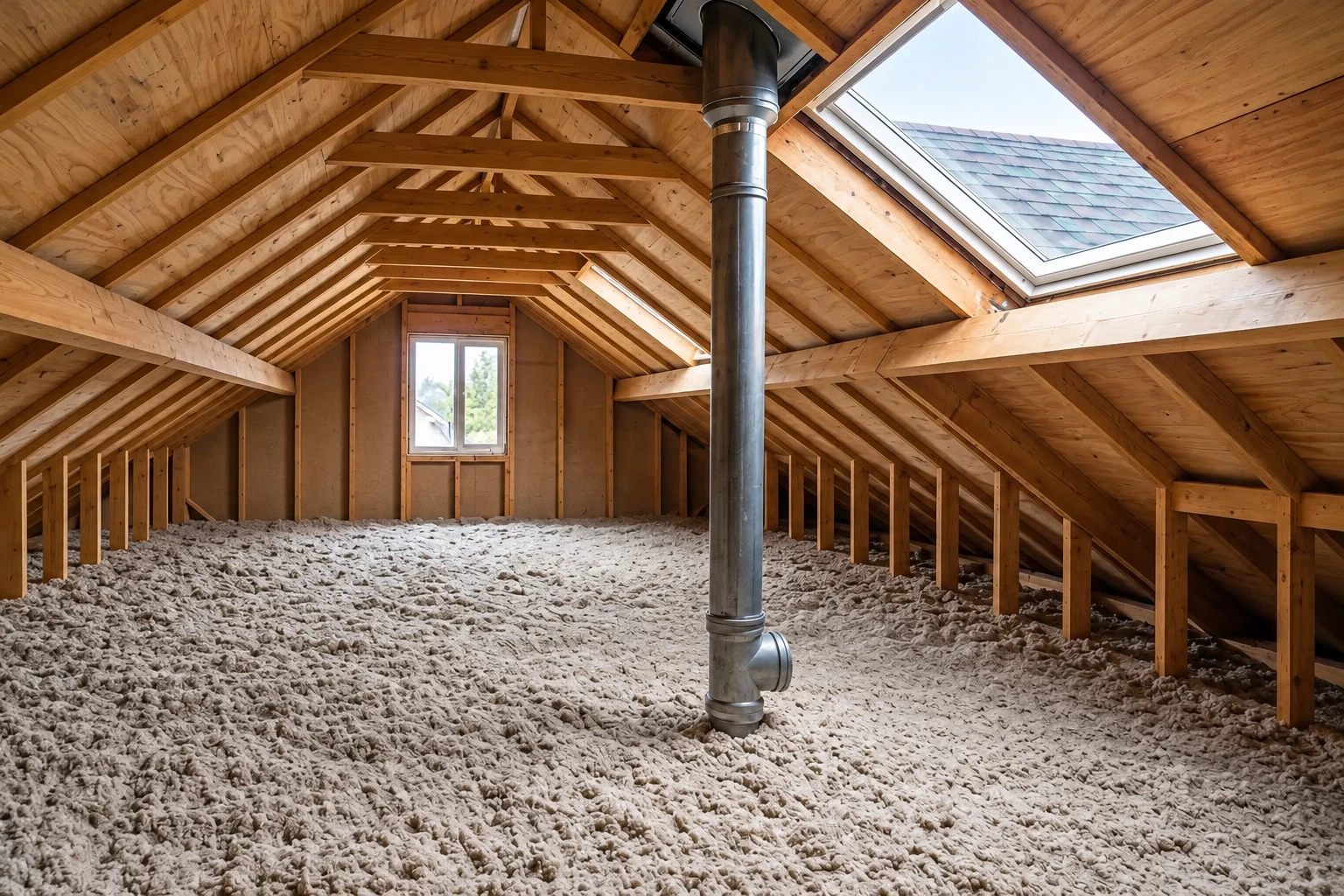
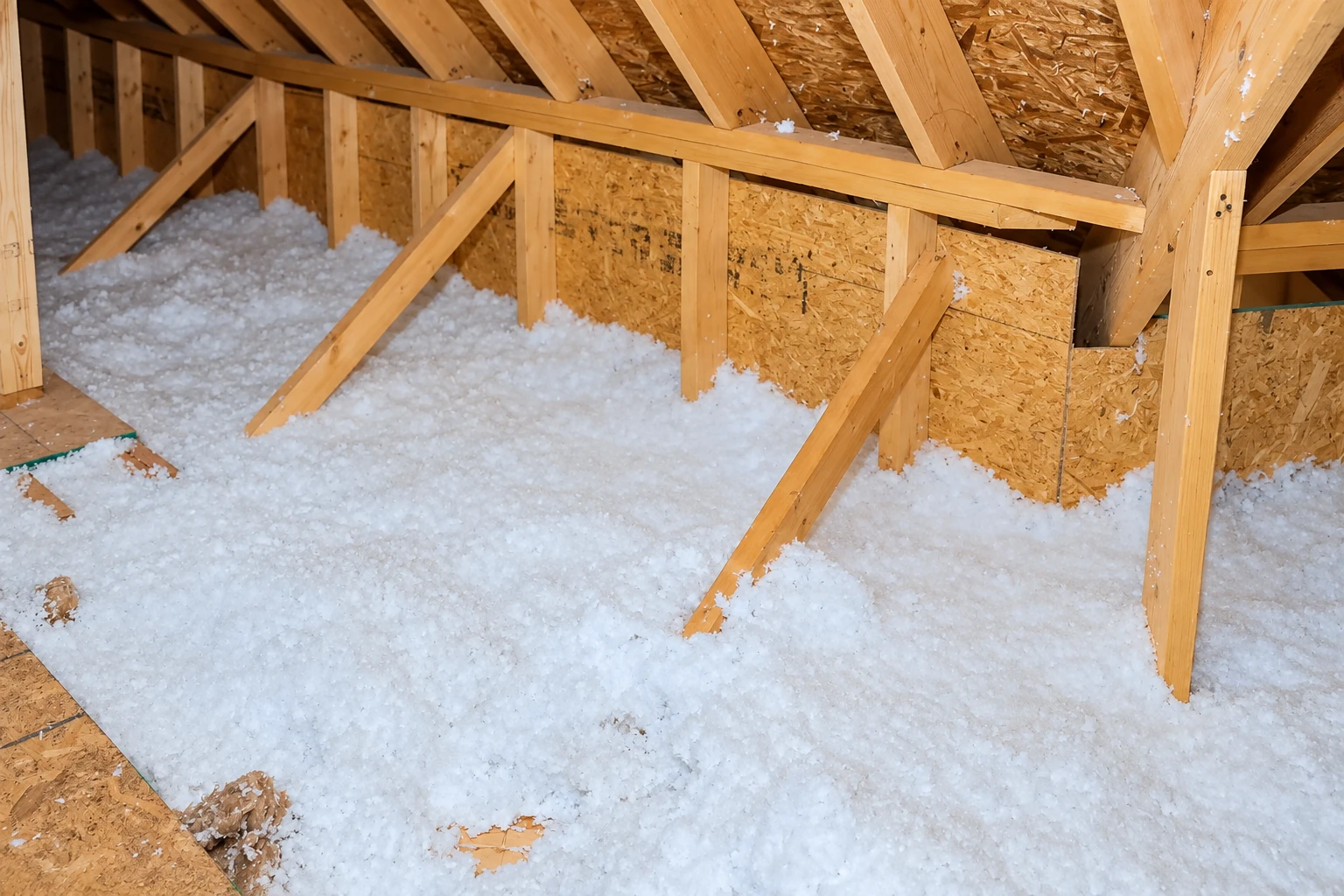
Blown-in insulation is loose cellulose or fiberglass blown through a hose across your attic floor or into the hollow spaces inside walls you already have. I start by helping you work out whether your attic, your walls or both need it, and then we talk through cellulose and fiberglass for your house before we pick one. In the attic, our crew does the air sealing first, closing the gaps around lights, pipes, wires and the hatch, because insulation laid over open gaps just fights a draft. Next we set baffles, guides at the roof edge, so the insulation stays out of the eaves and the attic keeps breathing. Then we blow the material across the whole ceiling at the density the maker calls for, with the edges as deep as the middle, since a layer blown too loose to stretch the bags lets air move right through it and settles more.
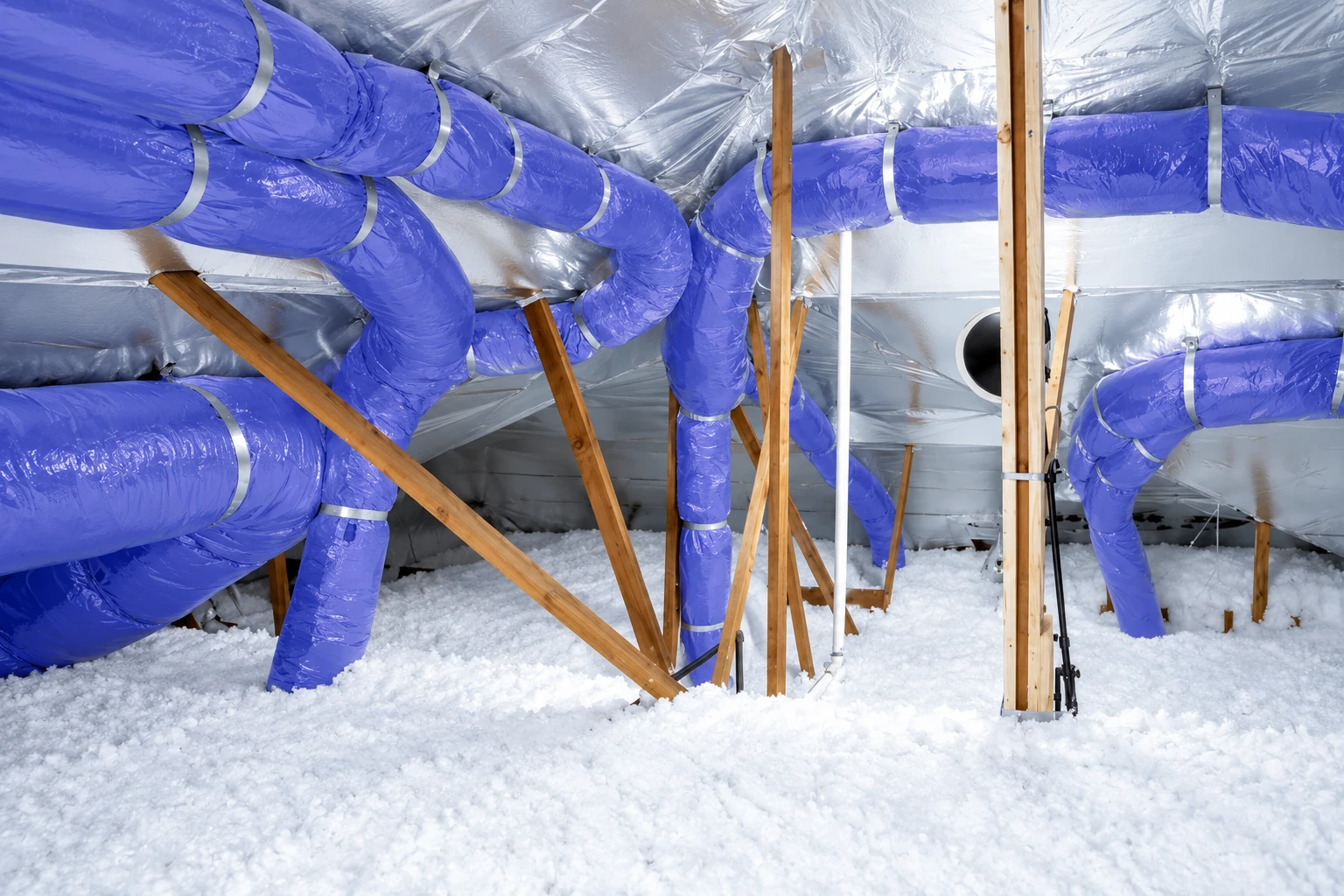
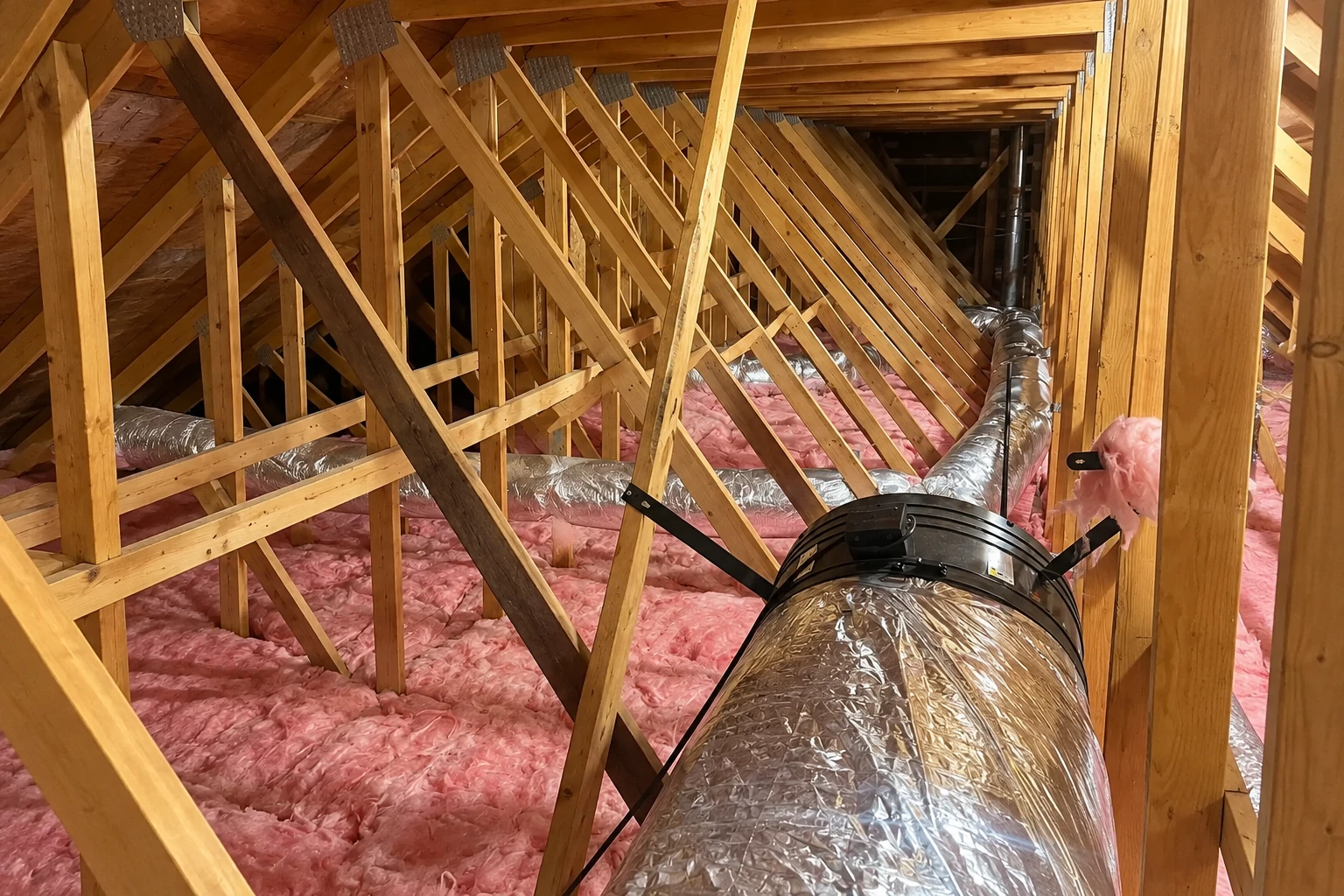
Some jobs need work before or around the attic. If the old insulation is soaked, stained or full of droppings, we don't bury it, and insulation removal comes first so the new layer starts clean. If the attic is one of several cold spots, we can look at the walls, floors and crawl space together as home insulation. Foam costs more because it seals and insulates at once, and it can be worth it when your ductwork runs through the attic, but otherwise sealing the gaps and topping up loose fill usually gets you more for the money. The price mostly turns on how big the area is, what's already up there and what has to happen before insulation goes in, and those same things set the schedule, so the written plan from your estimate lists each step in the order we'll do it.
What happens after you call us about blown-in insulation?
Here's how a job runs with us, from your first call to the walk-through at the end, with each step done in order.
Call or send a request
Call or use the form, and I come out myself to look at your attic, walls and crawl space and show you what I'm seeing.
Get your written plan
You get a written plan that puts each step in order and says why it comes there, like sealing before any insulation goes in.
Our installers do the work
Our installers seal the gaps, set the baffles and blow in the insulation, keeping the rest of your house covered and clean as they go.
Walk through it together
When the work is done, I walk through the finished job with you, so you know what went in, where it went and why.
Why Bellingham homeowners call Thermal Bellingham Insulation Company
The owner comes out first
I look at your house myself, show you what I'm seeing and build the plan with you before anything is scheduled.
Steps in order since 2023
I ran the schedule for a contractor for years, then started in Bellingham in 2023, so the checks come before the insulation.
Licensed, insured and easy to check
We're licensed and fully insured, and the last question below shows how to look up any contractor's registration before you hire.
Plain answers before any tools
People know us for explaining your house in plain words first, because you make better choices when you understand what's going on.
Get a written plan for your blown-in insulation
Tell us your house's year built, whether it's the attic, walls or both, and any knob and tube wiring or vermiculite you know of. We reply within one business day to set up a free on-site estimate, no obligation.
Blown-in insulation up close
Look through these examples of blown-in work, from attic floors covered edge to edge to baffles set along the roof line.
Blown-in insulation questions
Here are the questions that come up about blown-in insulation in Bellingham. If yours isn't here, call or send the form and I'll answer it for your house.
How much does blown-in insulation cost in Bellingham?
The cost comes down to your house, mostly the size of the attic or the number of walls, how many inches are already up there and how many gaps need sealing. Old insulation that has to come out first or wiring that needs repair adds to it, and the material you choose moves it too. When you compare bids, ask whether each one covers the entire ceiling all the way to the top plate, the top edge of your outside walls.
Is cellulose or fiberglass better for my attic?
Fiberglass is the safer pick where water is a risk, and cellulose is the better pick for slowing air through the attic. Cellulose settles about 10 to 20 percent over time and breaks down if it gets soaked, while fiberglass settles about 2 to 4 percent and takes no lasting harm from water. We look at your roof, your attic and how drafty the house is before we recommend one.
What is the best way to insulate my walls without opening them up?
Existing walls can be filled through small holes drilled near the top of each wall cavity, the hollow space between studs, from inside or outside the house. We'd usually rather work from inside, because drilling from outside cuts through the drainage plane, the layer behind your siding that sheds rain, and that then has to be patched or replaced.
What happens before insulation goes into my attic?
The attic gets checked first, because best-practice guidance calls for looking for water leaks, moisture, structural problems and pest damage, with a list of repairs for the owner before work starts. The same guidance holds off insulating over active knob and tube wiring, an early kind of house wiring, until it's replaced or properly boxed, and stops work when the old insulation is vermiculite, which may contain asbestos. Once those are handled, the air sealing and then the insulation go in.
Can blown-in insulation go in a mobile home?
Usually yes, with fiberglass, because cellulose is relatively heavy and isn't recommended for mobile home ceilings or floors, while lighter fiberglass may be used there. Tell us it's a mobile home when you call, and we'll plan the job around that.
How do I check a contractor's registration in Washington?
You can look up any contractor with the Washington State Department of Labor & Industries' Verify tool, which shows whether the business has an active contractor registration and a paid-up workers' comp account covering its employees. It also lists safety violations and lawsuits against the contractor's surety bond. If your house was built before 1978, the state directs owners to contact the Department of Commerce Lead Paint Program about lead rules before renovating.
Where we blow in insulation
We're based in Bellingham and work across Whatcom and Skagit counties, including Ferndale and Mount Vernon, mostly in drafty older houses. Pick your city below or call us.
Talk to us about blown-in insulation for your house
The work is backed by our satisfaction guarantee, so call (360) 255-0276 or send the form, and I'll come out to take a look.