
Vapor barrier installation in Bellingham WA - a crawl space floor that stays covered
Musty smell, cold floors or bare dirt under the house? We cover the crawl space ground so less moisture rises into your house.
- The owner looks first I come out myself and show you what's under there.
- Two setups explained We help you pick a plain ground cover or full seal.
- Safety check planned in A furnace or water heater below means we plan a safety check.
- A plan in order Your written plan lists each step in the order we'll do it.
- Licensed and fully insured.
- Free on-site estimates.
- Expect a reply within 1 business day.
How do you know your crawl space needs a vapor barrier?
Most crawl space trouble starts quietly under the floor, so catching these signs early usually means a simpler job and less damage to the wood.
Bare dirt under the house
You open the hatch and see soil with nothing over it. Bare ground keeps giving off moisture, and it rises into the framing and insulation until something covers it.
A musty smell inside
The house smells like an old basement, and it's worse in damp weather. Air from the crawl space drifts up into your rooms, so the smell usually starts below the floor.
Old plastic torn or bunched up
The sheet down there has rips, gaps or piles of plastic pushed into the corners. Moisture comes up through every hole, so a torn cover does less each year it stays.
Damp, sagging floor insulation
Batts under the floor hang loose or feel damp. Wet insulation stops slowing heat and holds moisture against the wood, so the floors stay cold and the framing stays wet.
Dark spots on the joists
You see dark spots or fuzzy growth on the wood framing. That usually means moisture has been sitting there a while, and it spreads further the longer it's left.
Plastic stops short of the walls
The cover lies in the middle, but dirt shows around the edges, posts and footings. Moisture finds its way around those gaps, so half a cover gives you half the job.
How our vapor barrier installation works
Every job starts with one choice, a plain ground cover with your vents left open or a fully sealed crawl space with the vents closed off, and I'll help you weigh it before anything is bought. If you're not sure, I usually lean toward a well-laid ground cover first, because it's simpler and doesn't rule out sealing later. If a furnace or water heater sits down there, we plan a safety check into the job so sealing doesn't create a new problem. Then our crew clears out debris and old torn plastic, smooths the ground, picks out sharp rocks that could poke through, and lays the new sheet with the seams overlapped. The price moves with the floor area, the sheet thickness you pick, how much old material has to come out and whether you seal, and the schedule mostly turns on how clear the crawl space is and what the permit check turns up. Your estimate comes as a written plan that lists each step in the order we'll do it.
A ground cover handles moisture from below, but the draft you feel often leaks out the top of the house, which is where attic air sealing closes the gaps around lights, pipes and the hatch. If the old batts under your floor are wet or falling, we can pull them and add retrofit insulation once the ground is covered, because dry insulation over a wet crawl space just starts the problem over.
What happens when you call about a vapor barrier in Bellingham?
From the first call to the final walk-through, I look at the job and check it, and our installers do the work in between.
Call or send a request
You call or send a request, and I come out myself to look in the crawl space. Then I show you what I found.
Get your written plan
You get a written plan that lists each step in order and says why it comes where it does. Any safety check is written in.
Our installers lay the barrier
Our installers clear the crawl space, prep the ground and lay the sheet. If you store things down there, moving them out first keeps us on track.
Walk through it together
When the work is finished, I walk through it with you so you know what was done. You'll see the edges, the seams and the posts.
Why Bellingham homeowners call Thermal Bellingham Insulation Company
The owner comes out first
I look at your crawl space myself and build the plan with you, so the person quoting knows your house.
Licensed and fully insured
Washington requires contractors to register with the state and show the number on estimates, so look for it on every quote.
In business since 2023
Before that I spent years scheduling jobs for a busy contractor, so I plan every step in the right order.
Used to older, drafty houses
Most of our calls come from older, drafty houses, plus landlords and property managers, across Whatcom and Skagit counties.
Get a written plan for your crawl space vapor barrier
Tell us roughly how many square feet the crawl space is, whether it has vents and whether a furnace or water heater sits down there. We reply within one business day to set up a free on-site estimate, with no obligation.
Vapor barrier work, up close
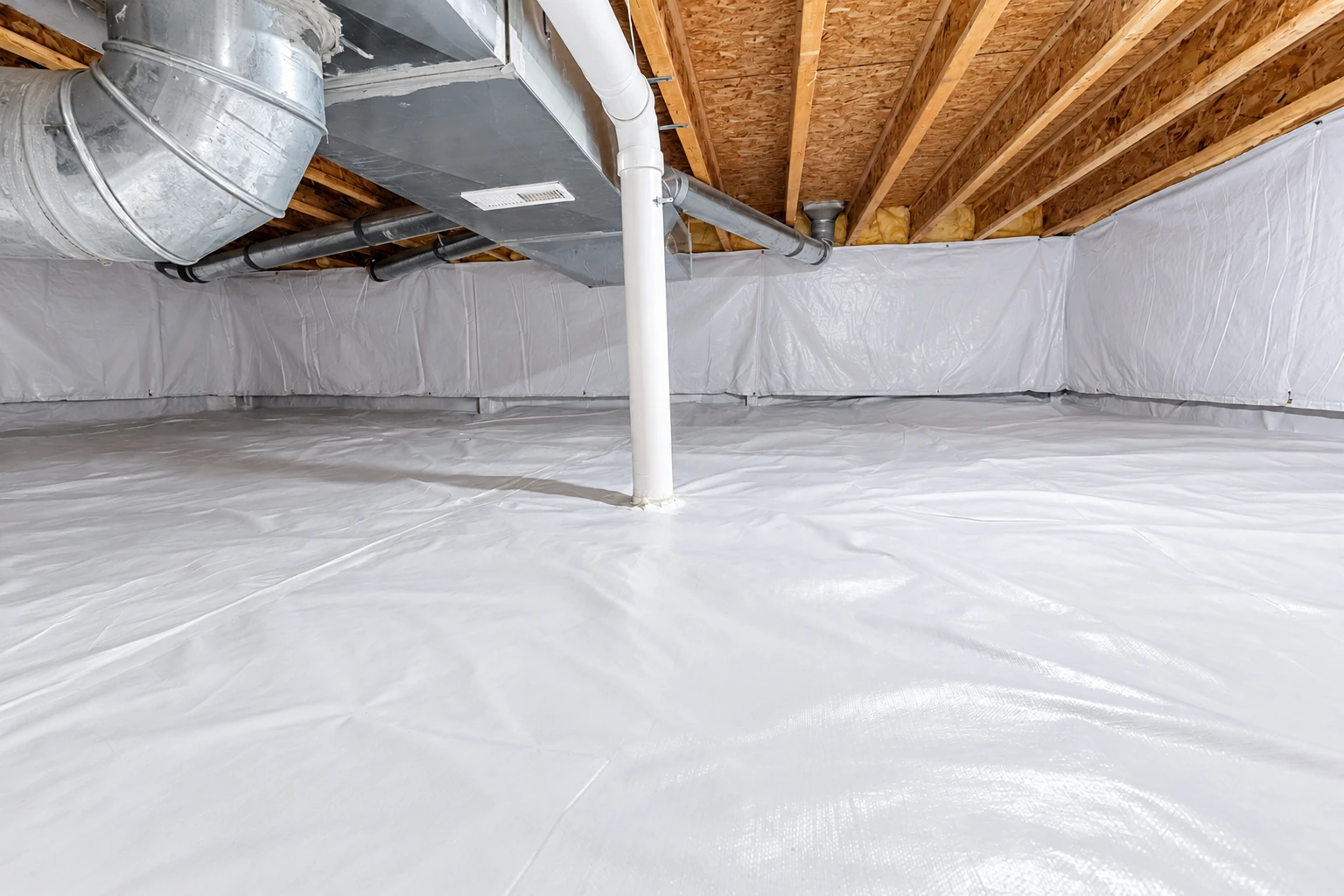
Look through these examples of crawl space vapor barrier work to see what a covered floor, lapped seams and wrapped posts look like.
Vapor barrier questions we hear
These are the crawl space barrier questions we hear most from Bellingham homeowners. If yours isn't here, call or send a request and I'll answer it for your house.
How much does a crawl space vapor barrier cost in Bellingham?
Across the US, a basic vapor barrier, plastic over the dirt floor only, usually costs about $0.50 to $1.50 per square foot. That's the national going rate for the plastic job, not a Bellingham quote or our price, and a sealed crawl space adds work beyond it. The number for your house comes from the estimate.
How long does a vapor barrier last?
By one cost guide's estimate, a 6-mil contractor-grade sheet lasts 3 to 5 years and a 20-mil reinforced barrier lasts 25 years or more. Mil measures how thick the plastic is, so the sheet you pick sets how soon the crawl space needs a new one. If you plan to stay in the house a long time, that's worth weighing against the price.
Does Washington require a ground cover in my crawl space?
Yes, Washington's residential code calls for a six-mil black polyethylene ground cover, or an approved equal, over the ground in crawl spaces, overlapped at the joints and run to the foundation wall. Bellingham enforces the state's construction codes, so that rule applies to houses in the city. A crawl space with a concrete slab floor at least 2 inches thick may skip the ground cover.
What changes if I seal my crawl space instead of venting it?
Sealing adds a radon system to the job and, with some appliances, a safety test. Washington's code lets an unvented crawl space go without vent openings when its listed conditions are met, including a continuous, taped barrier and a radon system, so the radon system belongs in the same project. If a natural draft furnace or water heater sits down there, a federal checklist calls for a combustion safety test afterward, which checks that exhaust isn't spilling back into the house. Questions about those conditions at your address go to the city's Permit Center at (360) 778-8300 or permits@cob.org.
What should I fix before sealing a vented crawl space?
Fix any water coming in, moisture damage and pest damage first. A federal checklist calls for an inspection for those before a vented crawl space becomes unvented, with a list of problems given to the owner before work goes on, so repairs come before the seal. I'd rather find those on the first visit than after the plastic is down.
How do I know if a crawl space vapor barrier was installed right?
Look for plastic that covers the whole floor, or as close as reasonably possible, and runs up the walls, columns and footings, which is what federal guidance calls for. Gaps at the edges and posts are where ground moisture gets around a sheet, so ask any crew how they plan to cover them.
Ask about a vapor barrier for your crawl space
We're open evenings and weekends, so call (360) 255-0276 after work or send the form tonight.