
Closed-cell foam insulation in Bellingham WA - a basement that's sealed and warmer
Cold basement walls, drafty floors or a damp smell downstairs? We seal and insulate those spots in one rigid layer of closed-cell foam.
- Foam where it pays I show you which spots are worth closed-cell's higher cost.
- I look first I check the space myself and build the plan with you.
- Time away, planned ahead We plan where everyone stays before anyone starts spraying.
- A final walk-through I walk the finished job with you and explain what we did.
- Licensed and fully insured.
- Free on-site estimates.
- Expect a reply within 1 business day.
Is closed-cell foam the fix for your cold, damp spots?
Cold walls, drafty floors and musty smells usually start small. Catching them early means we're insulating dry walls and sound framing instead of cleaning up damp first.
Cold, clammy basement walls
Bare concrete that feels cold and damp usually means heat is leaving straight through the foundation. Left alone, that chill and moisture work into anything stored or finished down there.
Cold floors over the basement
Cold floors often trace back to the rim joists, the boards around the edge of your floor framing, leaking air. The furnace runs longer every winter until they're sealed.
A musty smell downstairs
A musty smell usually means moisture is moving through the foundation walls into the basement air. Waiting tends to mean more mildew on whatever sits against those walls.
Wet or sagging old batts
Stained, sagging fiberglass on a basement wall usually means moisture is getting behind it. Wet batts hold damp against the wall, so they have to come out before anything new goes in.
A hot or cold vaulted ceiling
A vaulted ceiling that's hot in July and cold in January usually has too little insulation squeezed into a shallow space. That room keeps pushing up your power bill until it's fixed.
The room over the garage
The room over the garage often swings hot and cold because its floor has little room for thick insulation and leaks air at the edges. It rarely gets better on its own.
How we install closed-cell foam insulation
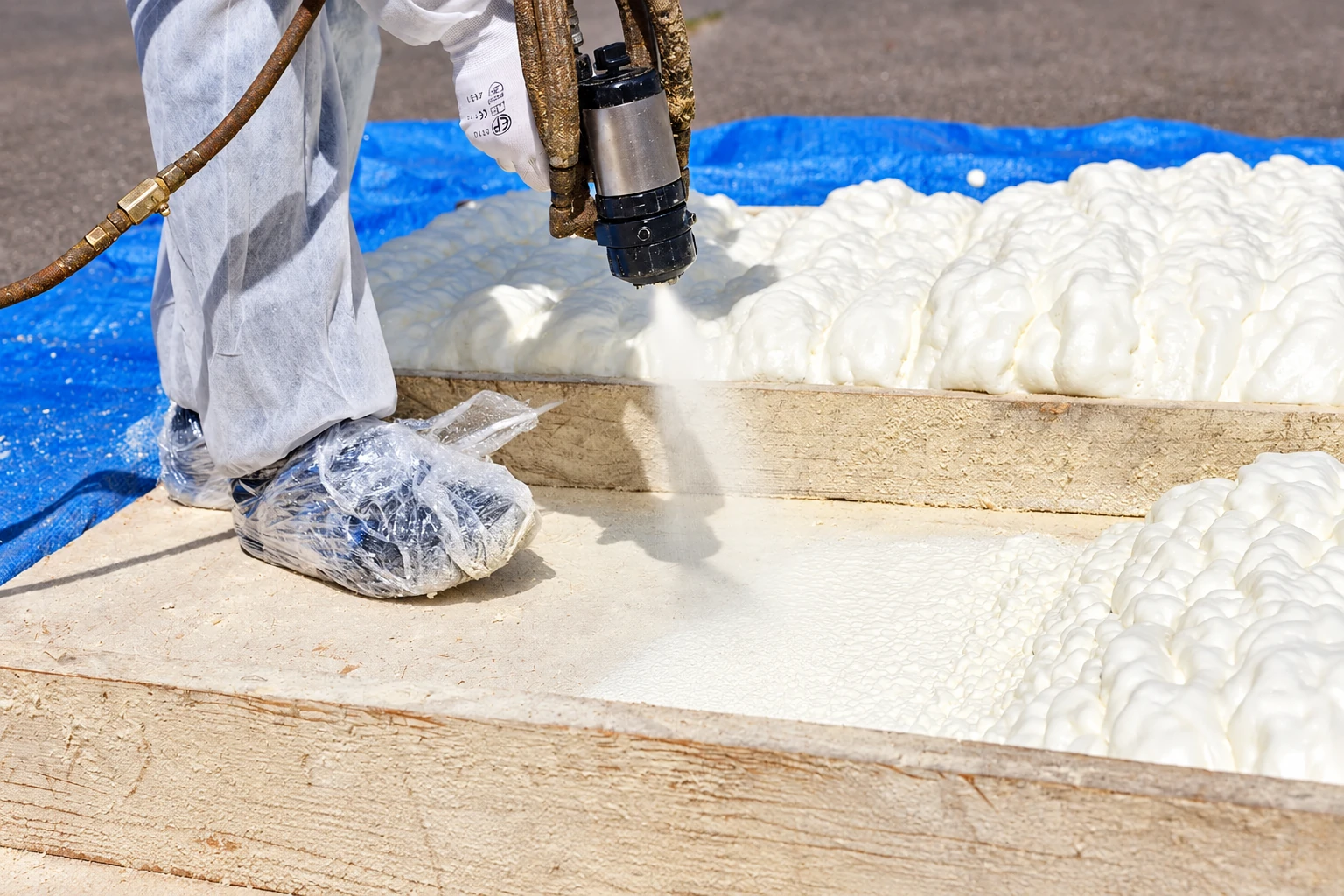
Closed-cell foam is a spray insulation that sets hard and dense, and at the usual thickness it blocks nearly all moisture vapor, so one layer insulates, seals air and holds back damp. It costs more than other insulation, so I start by walking you through where it earns that cost, which is usually basement walls, rim joists and vaulted ceilings too shallow for thick batts. Then we clear out any old wet insulation, because foam sprayed over a damp mess just locks the problem in, and we plan your time away from home before the crew starts spraying. The price mostly moves with how many square feet we cover, how thick the foam goes and how much prep the space needs, and the schedule turns on that prep and the conditions on the day. Your written plan from the estimate lists each step in the order we'll do it.
Not every spot needs it. In a regular vented attic I'll usually tell you that sealing the gaps and topping up the loose fill does the job for less, unless your ductwork runs up there. For attics and inside walls where moisture isn't the worry, open-cell foam insulation is the lighter, lower-cost spray we'd look at. We bring the same step-by-step planning to shops, offices and rental buildings through our commercial insulation work, which suits the landlords and property managers who call us.
What happens after you call us about closed-cell foam?
The job runs in four steps, from my first look at your house to the walk-through once our installers finish.
Call or send a request
You call or fill out the form, and I come out myself to look at your basement, crawl space or attic. I show you what I'm seeing as we go.
Get your written plan
You get a written plan that puts each step in order and says why it comes where it does. It also covers your time away from home.
Our installers spray the foam
Our installers prep the space and spray the foam while you're out of the house. If the surfaces or conditions aren't right that day, we adjust the schedule.
Walk through it with me
When the work is done, I walk through the finished job with you. You'll know exactly what went where and why.
Why Bellingham homeowners call Thermal Bellingham Insulation Company
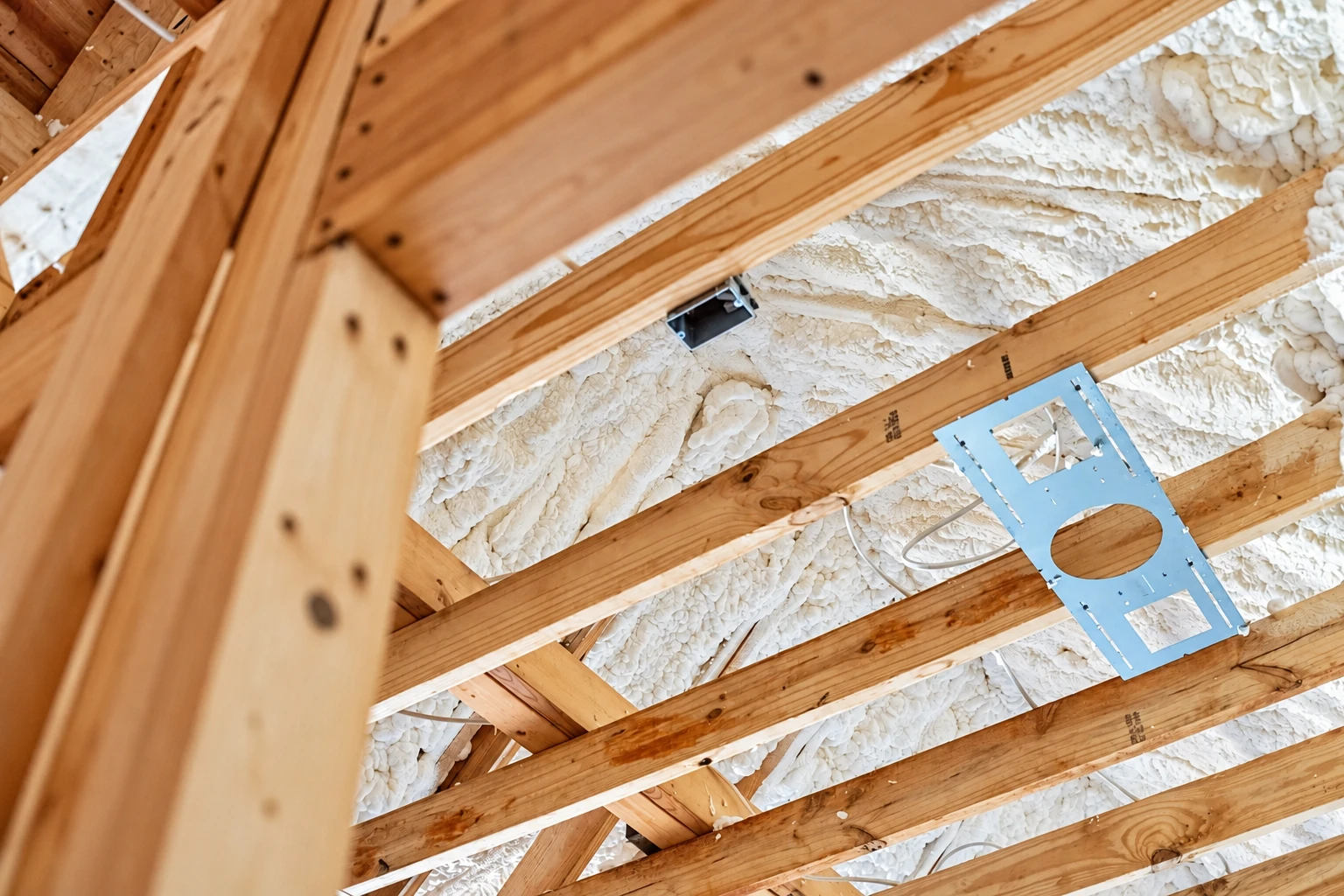
I explain before anyone sprays
I look at the space myself and show you what I'm seeing, so you choose with the facts in front of you.
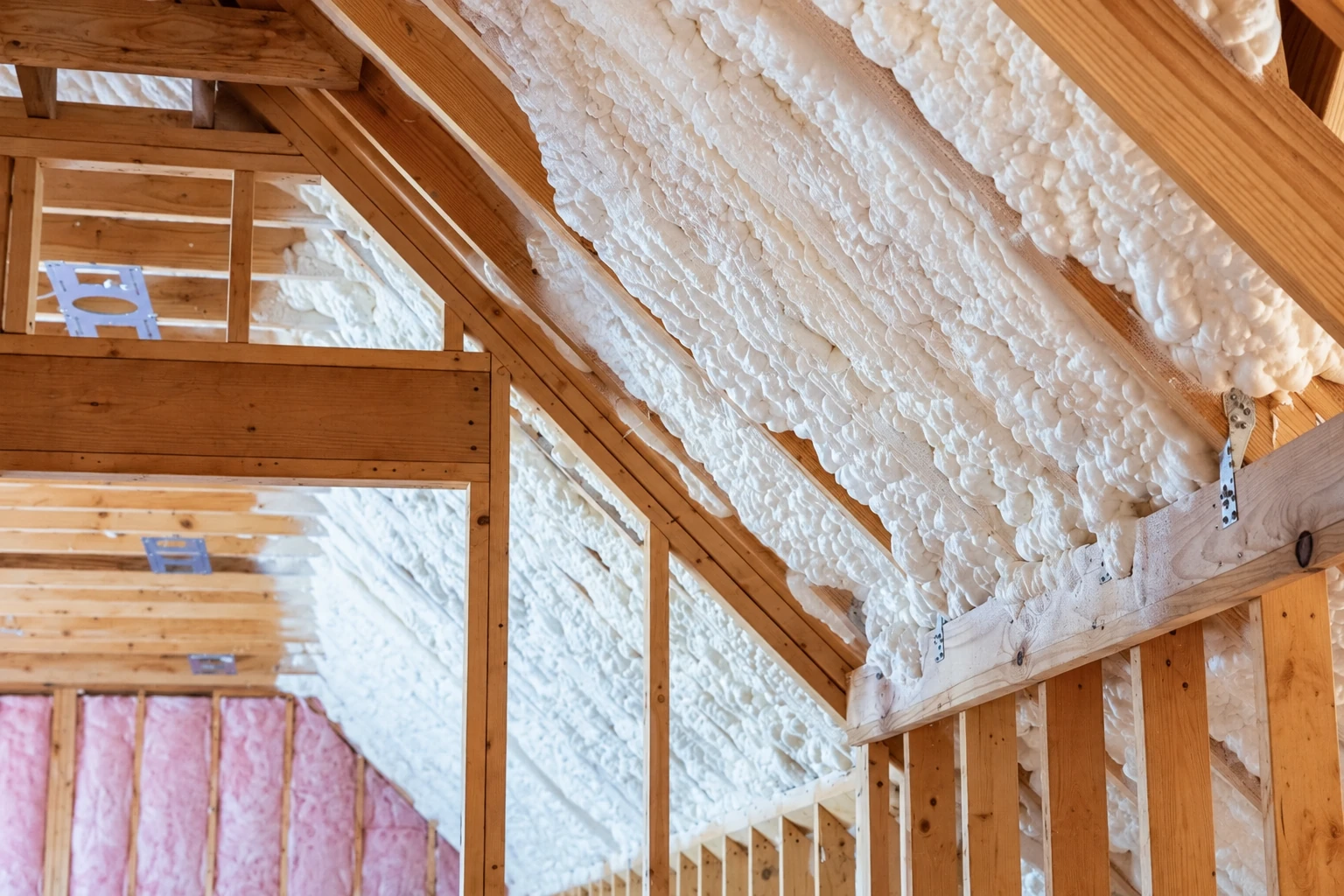
Checks first, then the work
I ran schedules for a busy contracting company before starting this business in 2023, so every plan puts the checks first.
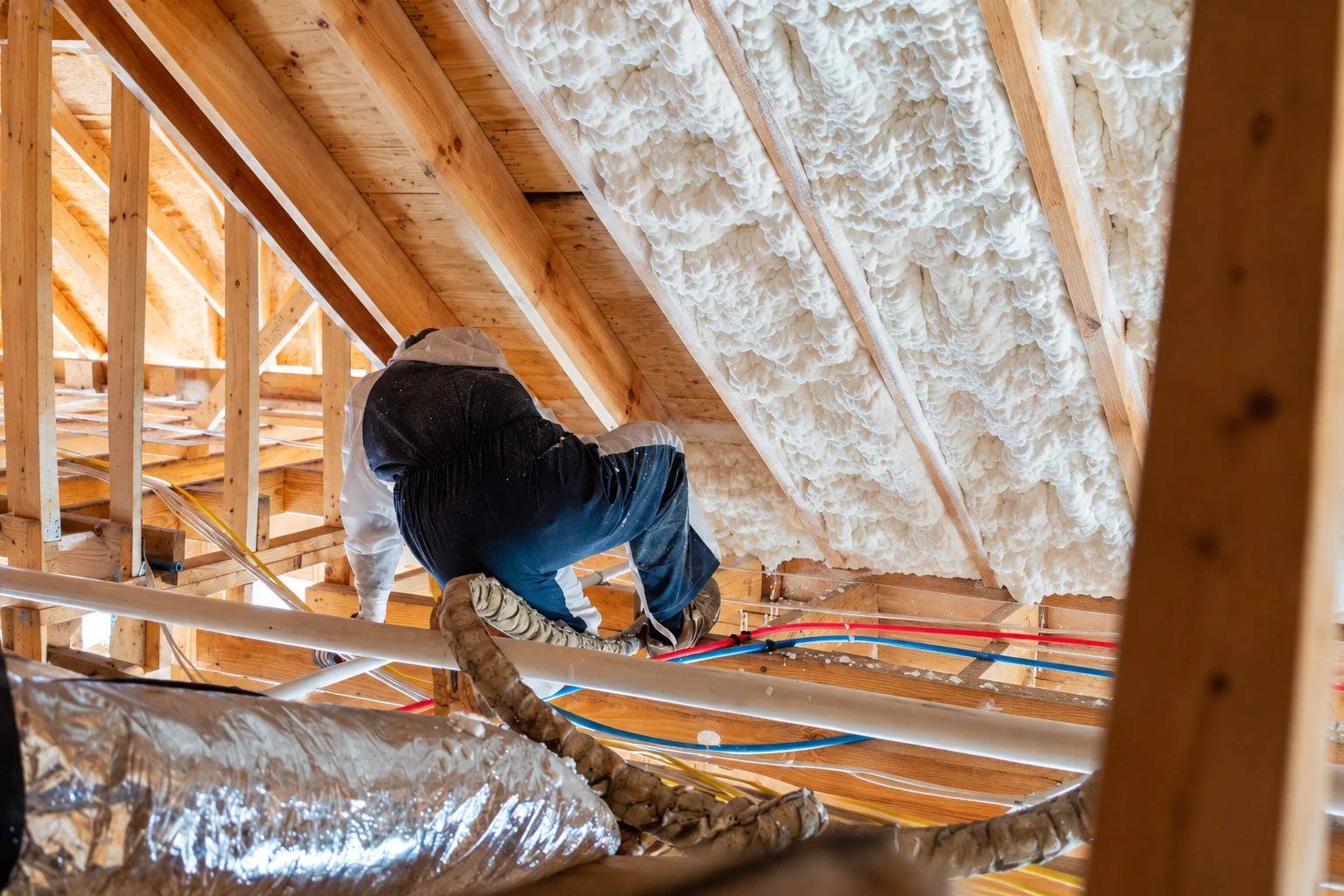
Licensed, insured and easy to check
We're licensed and fully insured, and you can look up any contractor's registration on the state's Verify tool.
Used to Bellingham's older houses
Most of our calls come from drafty, older houses around Bellingham, where cold basements and chilly floors are a common complaint.
Get a closed-cell foam plan for your house
Tell us the rough size of the area, where it is, like basement walls or rim joists, and whether you're inside Bellingham city limits. We reply within one business day to set up a free on-site estimate, with no obligation.
Examples of closed-cell foam work
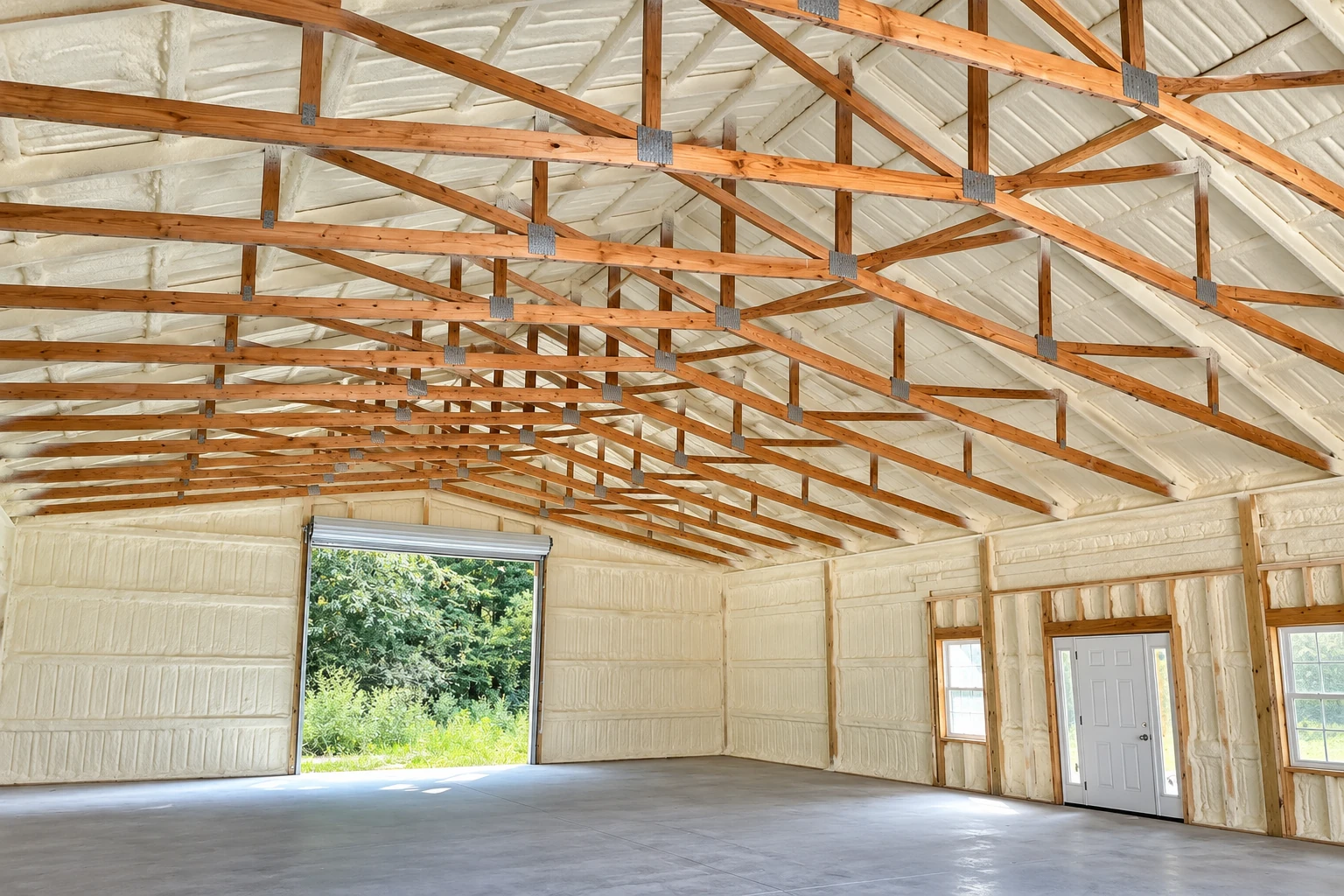
Look through these examples of closed-cell foam on basement walls, rim joists and ceilings to see what a finished layer usually looks like.
Questions about closed-cell foam
These are the questions I hear most from Bellingham homeowners about closed-cell foam. If yours isn't here, call or send a request and we'll talk through your house.
Is closed-cell or open-cell spray foam better for my home?
Closed-cell is the better pick for basement walls, rim joists and tight ceilings, while open-cell usually makes more sense where moisture isn't a concern. Each inch of typical closed-cell foam gives you about R-6, the measure of how well insulation slows heat, against about R-3.6 for open-cell, and closed-cell also blocks the moisture vapor open-cell lets through. One building research guide rates closed-cell as preferred for foundation walls, since water-tolerant insulation right against the inside of the wall has worked most consistently in basements.
How much does closed-cell spray foam cost in Bellingham?
Closed-cell spray foam covering 1,000 square feet at 3 inches thick usually runs about $3,200 to $4,900 per job in Bellingham. That's the going rate for that size of job, not a quote, so a small rim joist job or a thicker wall layer will land somewhere else. I measure your space at the estimate so your written plan fits your house.
How long do I have to stay out of the house after spray foam insulation?
Federal safety staff advise leaving the house during installation and for at least 24 hours after. Spray foam chemicals, including isocyanates, can irritate skin, eyes and lungs through vapors and dust during and after the work, and how long that lasts depends on the foam and the house. So plan a place for everyone, kids and pets included, and ask us for your re-entry time, the point when it's safe to come back.
Do I need a permit for spray foam insulation in Bellingham?
It depends on the scope of your job, because the City of Bellingham requires a permit for any project that isn't on its list of work exempt from permits. Many Bellingham addresses are actually outside city limits, so it's worth confirming which side of the line you're on first. Before we schedule, we check with the office that covers your address and walk you through anything they need from you or from us.
What is the best way to insulate rim joists?
Spray foam is usually the best way, because it seals the air leaks and insulates the rim joist in one step. Closed-cell needs a much thinner layer than open-cell to count as an air barrier, which helps in the cramped space at the top of a basement wall.
Can spray foam go on in Bellingham's cold, damp weather?
Usually yes, with some planning, because air and surface temperature, humidity and moisture on the surface all change how the foam goes on. That can mean shifting the schedule or warming the space first, and you can ask whether your job needs a different seasonal version of the foam to match the conditions.
Where we spray closed-cell foam
We're based in Bellingham and work in the cities around it across Whatcom and Skagit counties, including Ferndale and Mount Vernon. Pick your city below or give us a call.
Talk through your closed-cell foam job with us
We take calls until 11 PM on weeknights and 10 PM on weekends, so you can call (360) 255-0276 after work.